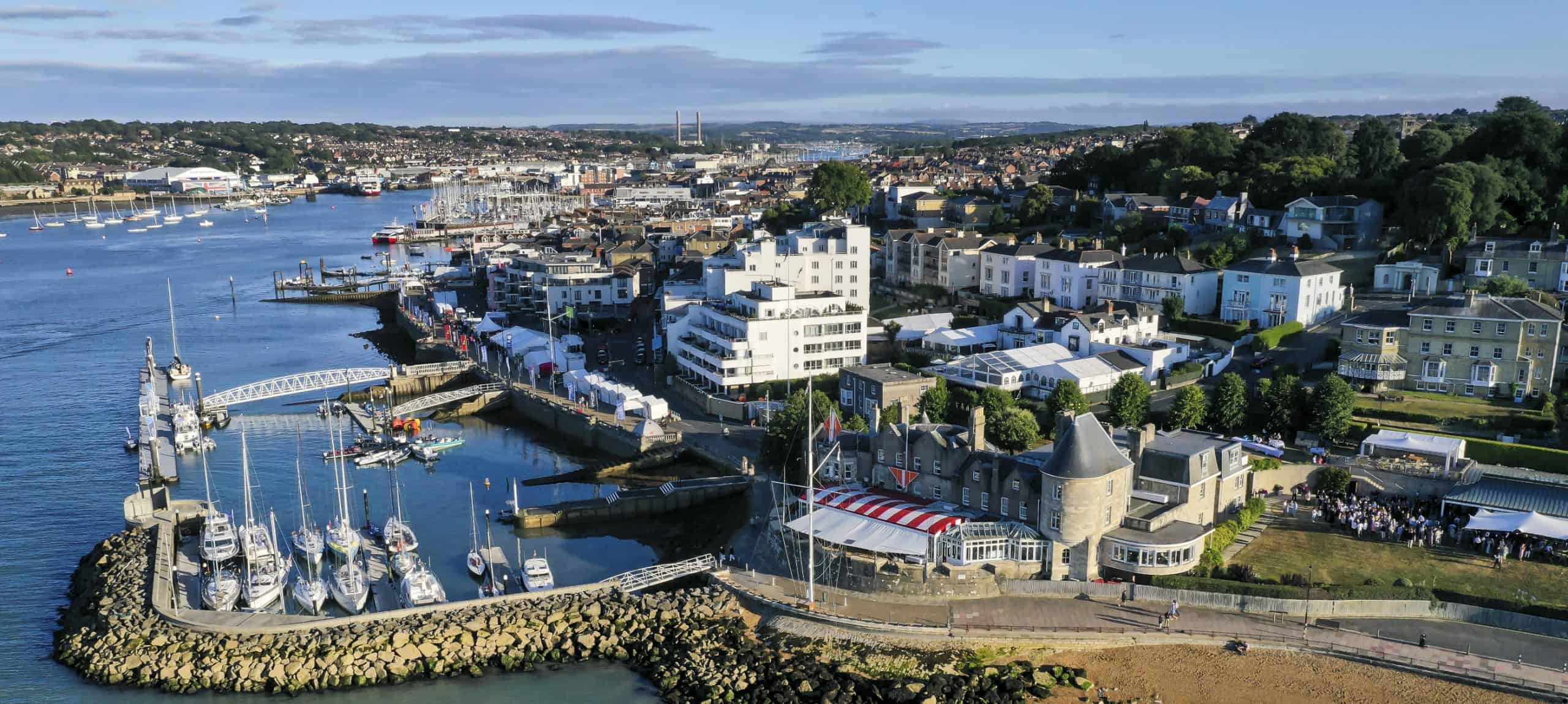
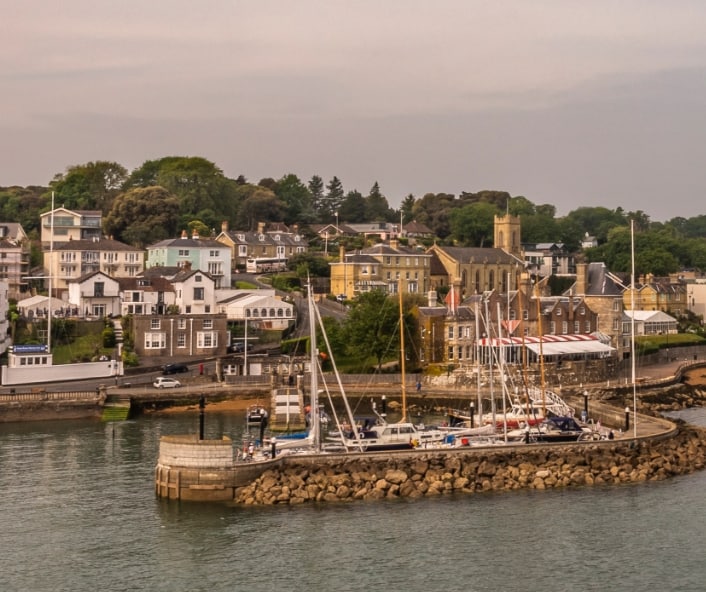
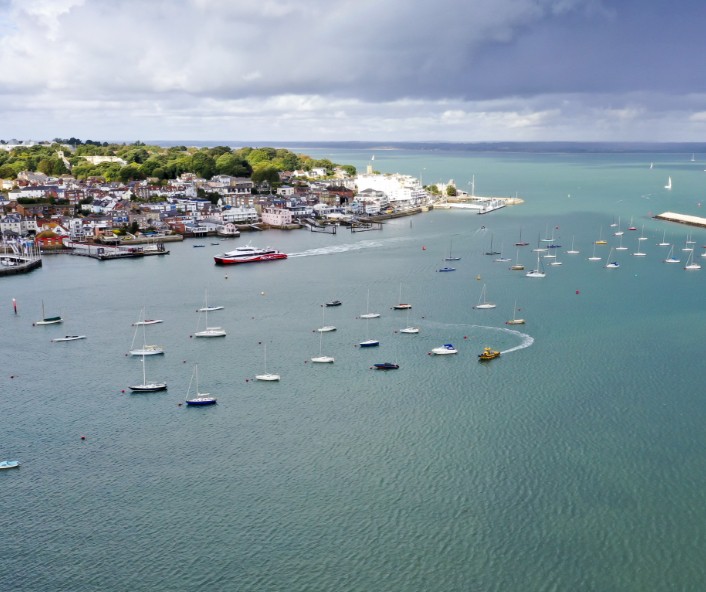

Cowes Harbour is the major port of entry for commercial shipping trading to the Isle of Wight, as well as an important destination for a variety of passenger and vehicle ferries, and cruising vessels.
For information, we have included in this section typical shipping movements and regulations to observe.
A vessel outbound approaching the chain ferry
COMMERCIAL SHIPPING
Cowes Harbour is the major port of entry for commercial shipping trading to the Isle of Wight. Approximately 600,000 tonnes of cargo are handled annually including such commodities as fuel, oil/petroleum, stone, shingle aggregates, timber, grain, and general cargo. Ships of up to 100 metres (330ft) in length and with a draft of up to 5.7 metres (18.7ft) use the port and mainly berth at Kingston or Medina Wharves.
Vessels generally enter/depart from about 2.5 hours either side of high water, although vessels in ballast may enter/depart at any time during periods of neap tides. Movements may be at any time during the day or night, depending on the actual time of high water. As a result, ships may be required to enter or leave Cowes during periods when yacht racing is in progress, although such movements will try to be arranged to avoid peak periods of yacht movements.
A regular vehicle ferry service operates between East Cowes and Southampton with high-speed passenger ferries operate from their terminal alongside Cowes Town Quay.
Newport Harbour – Ships of up to 75 metres LOA transit the Folly Reach in order to proceed to berths in Newport Harbour.
COWES CHAIN FERRY
A chain ferry operates between East and West Cowes between 05:00 and 00:30 but is manned throughout the 24hr period maintaining a listening watch on VHF Channel 69. All vessels over 20m in length or requiring an unrestricted transit past the chain ferry should make early contact and agree which side the chain ferry will moor during the passage. Your attention is drawn to Local Notice to Mariners 27 of 2010 which gives detailed information regarding navigation in the vicinity of the chain ferry. Particular attention should be paid to the maximum permissible draught:
Maximum Permissible Draught = Actual tide height + 1.5m
If within 0.8m of the maximum permissible draught the chain ferry shall be requested to moor on the East bank for the transit, early notice must be given to ensure that the chain ferry has adequate time to comply with the master/pilot direction.
The chain ferry moored at West Cowes
ANCHORAGE
Anchorage for vessels destined for Cowes:
Vessels 61 metres LOA and above:
NOTE: I f the above anchorages are unsuitable, owing to weather conditions, then vessels of 48 metres to 150 metres LOA may embark a Cowes Pilot and proceed to anchor in Cowes Roads (Triangle) to await entry into Cowes Harbour.
Vessels less than 48 metres LOA:
NOTE: Vessels should avoid anchoring within 150 metres of the Trinity House mooring buoy (Fl4 Y 5secs) owing to ground tackle. Vessels must keep to the north of the Snowden seasonal buoy.
NATURE OF SEABED
Sand/Shingle – Moderate holding ground.
Vessels are cautioned to keep clear of the ‘No Anchorage’ area, as charted, to the north of Old Castle Point.
Tides – Strong tides may be experience in Cowes Roads with rates up to 3.5 knots on a spring ebb tide.
DENSITY
Cowes – 1025 salt water
Newport – varies according to amount of recent rainfall and state of tide.
EMERGENCY PROCEDURES
See COWES HARBOUR EMERGENCY PLAN
In cases of fire or other emergency the alarm should be raised immediately by:
a. Plain language message on VHF Channel 16 direct to ‘Solent Coastguard’ (24 hours)
b. On VHF Channel 69 to ‘Cowes Harbour Radio’ (office hours only).
NOTE: If no reply is received from Cowes Harbour Radio, then request on Channel 16 that Solent Coastguard contact the Harbour Master or representative by telephone.
Vessels alongside berths within Cowes Harbour should telephone the emergency services (Telephone: 999), giving a short message stating the name of the berth and ship involved and the nature of the incident.
Alternatively, they may contact ‘Solent Coastguard’ as detailed above.
GARBAGE
It is an offence to dump any garbage or refuse overboard within Cowes Harbour and the Solent.
Wharf operators/owners provide reception facilities for garbage originating from ships using their berths.
Any difficulties should be notified to shipping agents or the Harbour Authority. Ships at anchor should retain their garbage on board until the vessel is berthed.
OIL POLLUTION
Sightings of significant patches of oil within Cowes Harbour should be reported, giving the position, extent, description and direction of movement, if possible. (Very small patches of oil of an insignificant nature should NOT be reported).
Reports should be made as follows:
To HM Coastguard (Call sign ‘SOLENT COASTGUARD’) VHF radio Channel 16/67. Telephone Lee-on-Solent 02392 552100.
During office hours, Monday to Friday, reports may also be made to Harbour Master Cowes (Call sign ‘COWES HARBOUR RADIO’) VHF radio Channel 69. Telephone 01983 293952. If no answer is received then contact HM Coastguard, as above.
OILY WASTE
There are no dedicated facilities, but shipping agents can arrange for oily waste to be collected by road tanker.